English meaning: Om; with the seed syllable śrīṃ, salutations to Mahalakshmi.
हिंदी अर्थ: ॐ; श्रीं बीजाक्षर के साथ महालक्ष्मी को नमस्कार।
Roman Hindi meaning: Om; Shreem beej-akshar ke saath Mahalakshmi ko namaskar.
What is Om Shrim Mahalakshmyai Namah?
Om Shrim Mahalakshmyai Namah is a complete one-line salutation to Mahalakshmi: ॐ श्रीं महालक्ष्म्यै नमः. Śrīṃ is a seed syllable associated with Lakshmi, not a word with one literal English equivalent; mahālakṣmyai namaḥ means salutations to Mahalakshmi. This page gives the exact short formula, not a collection, a longer scripture excerpt or a promise of prosperity.
What each part says
Oṃ is the opening sacred syllable. Śrīṃ (श्रीं, often written Shreem) is a bīja or seed syllable associated with Lakshmi; it is retained rather than translated as a financial outcome. Mahālakṣmyai is the form addressing Mahalakshmi in a salutation, and namaḥ expresses reverence or a bow. Taken together, this is a brief devotional salutation, not a sentence promising a result.
Reading the selected line
The Roman line uses IAST: oṃ śrīṃ mahālakṣmyai namaḥ. The long ī in śrīṃ and the final nasal sign are shown rather than flattened into an English spelling. Popular forms such as Om Shreem Mahalakshmiyei Namaha are search and pronunciation aids, not separate canonical texts. The displayed Devanagari and IAST are the complete single line in the selected licensed source; no opening, closing or missing verses are implied.
Source and attribution boundary
Valkala uses the one-line reading in the MIT-licensed hindu-devotional-texts 0.8.0 package. An independent temple page also prints the same Devanagari line before other Lakshmi material, and a separate Adi Lakshmi namavali prints it as one salutation. Those comparisons support the wording, not a claim that the line originated in a named Veda, Purana, historical author or one universal lineage. The package's suggested repetition count and prosperity language are not adopted as requirements or guarantees.
How this differs from other Lakshmi pages
This reader owns only the exact short line and its meaning. The complete Lakshmi Ashtottara owns its 108-name sequence; the selected Shri Suktam owns its fifteen-verse core. For how a lotus-seed mala can be used as an optional counting aid, use the separate Kamal Gatta guide. A household, temple or teacher may use a different formula or have specific guidance for bīja practice; this page does not prescribe initiation, a fixed count, fasting or a guaranteed financial outcome.
Aids for your mantra practice
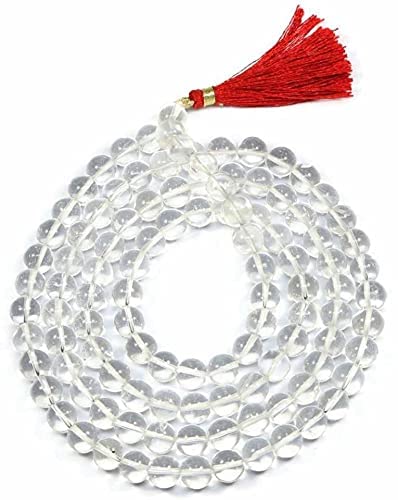
Many practitioners chant on a 108-bead mala while seated on a dedicated asana. Here are a few reviewed options.