देवउठनी एकादशी (Dev Uthani Ekadashi)
Dev Uthani Ekadashi, also called Prabodhini or Devutthana Ekadashi, falls on Friday, 20 November 2026 for New Delhi, and Tulsi Vivah the next day, Saturday, 21 November. Both dates are checked against Drik Panchang and Prokerala. The Vaishnava fast is on 21 November. In 2027, Dev Uthani Ekadashi is on 10 November.
देवउठनी एकादशी, जिसे प्रबोधिनी या देवोत्थान एकादशी भी कहते हैं, नई दिल्ली के लिए शुक्रवार, 20 नवंबर 2026 को है, और तुलसी विवाह अगले दिन, शनिवार, 21 नवंबर को। दोनों तिथियाँ Drik Panchang और Prokerala से मिलाई गई हैं। वैष्णव व्रत 21 नवंबर को है। 2027 में देवउठनी एकादशी 10 नवंबर को है।
Dev Uthani Ekadashi, jise Prabodhini ya Devutthana Ekadashi bhi kehte hain, New Delhi ke liye Shukravar, 20 November 2026 ko hai, aur Tulsi Vivah agle din, Shanivar, 21 November ko. Dono tithiyan Drik Panchang aur Prokerala se milayi gayi hain. Vaishnav vrat 21 November ko hai. 2027 mein Dev Uthani Ekadashi 10 November ko hai.
When is Dev Uthani Ekadashi?
Kartika Shukla Ekadashi. Smarta calendars keep the fast on the day Ekadashi prevails at sunrise; the Vaishnava fast is sometimes a day later. Tulsi Vivah follows on Kartika Shukla Dwadashi in the North Indian calendar.
कार्तिक शुक्ल एकादशी। स्मार्त पंचांग में सामान्यतः सूर्योदय के समय एकादशी वाले दिन व्रत होता है; वैष्णव व्रत कभी-कभी एक दिन बाद पड़ता है। उत्तर भारतीय पंचांग में तुलसी विवाह अगले दिन, कार्तिक शुक्ल द्वादशी को होता है।
- Dev Uthani (Prabodhini) Ekadashi: Friday, 20 November 2026 (New Delhi reference · Smarta tradition)
Vaishnava tradition: Saturday, 21 November 2026.
Checked 2026-09-29 against: Drik Panchang — 2026 Ekadashi dates, New Delhi · Prokerala — Dev Uthani (Prabodhini) Ekadashi 2026, New Delhi - Tulsi Vivah: Saturday, 21 November 2026 (New Delhi reference · North Indian (Kartika Shukla Dwadashi) tradition)
Checked 2026-09-29 against: Drik Panchang — Tulsi Vivah 2026, New Delhi · Prokerala — Tulsi Vivah 2026, New Delhi
Dates can differ by a day in other places and traditions. For your city, check a local panchang or your temple calendar.
What to read
Puja outline
- Decide before the day how you will keep the Ekadashi fast, and make it suit your health. Grains are traditionally avoided.
एकादशी व्रत किस प्रकार रखेंगे, यह पहले से तय करें और अपने स्वास्थ्य के अनुसार रखें। परंपरा से अन्न नहीं लिया जाता। - Clean the puja place and worship Vishnu with flowers, tulsi leaves and a lit diya.
पूजा स्थान साफ़ करें और फूल, तुलसी दल और जलते दीपक से भगवान विष्णु की पूजा करें। - Many households ring a bell and sing to mark the Lord waking after four months; follow your family's custom.
कई परिवार चार महीने बाद भगवान के जागने के प्रतीक रूप में घंटी बजाते और भजन गाते हैं; अपने परिवार की रीति अपनाएँ। - Read one complete Vishnu text, such as Vishnu Sahasranamam, and close with Om Jai Jagdish Hare.
विष्णु सहस्रनाम जैसा कोई एक पूर्ण पाठ करें और ॐ जय जगदीश हरे से समापन करें। - Break the fast the next day after sunrise, within the parana window in your panchang.
अगले दिन सूर्योदय के बाद अपने पंचांग के पारण समय में व्रत खोलें। - For Tulsi Vivah, dress the tulsi plant like a bride, place a Shaligram or image of Vishnu beside it, and perform a simple puja and aarti, or join your temple's ceremony.
तुलसी विवाह के लिए तुलसी के पौधे को दुल्हन की तरह सजाएँ, पास में शालिग्राम या भगवान विष्णु का चित्र रखें, और सरल पूजा व आरती करें, या अपने मंदिर के आयोजन में शामिल हों।
A simple household outline. Customs differ by family, region and tradition; follow your own tradition or priest where it differs.
Samagri for this puja
Practical items for the puja, linked to Valkala product guides.

100% Pure Brass Spoon Aarti Diya with Wooden Handle | Medium Size Pooja Diya | Traditional Oil Lamp for Temple, Prayer & Festivals | Housewarming & Indian Ceremonial Gifting
A diya or aarti lamp made with brass and wood and listed in a medium size.
Who it may suit: Daily aarti, Festive lighting, Home mandir
Key facts: Material: Brass, Material: Wood, Medium Size
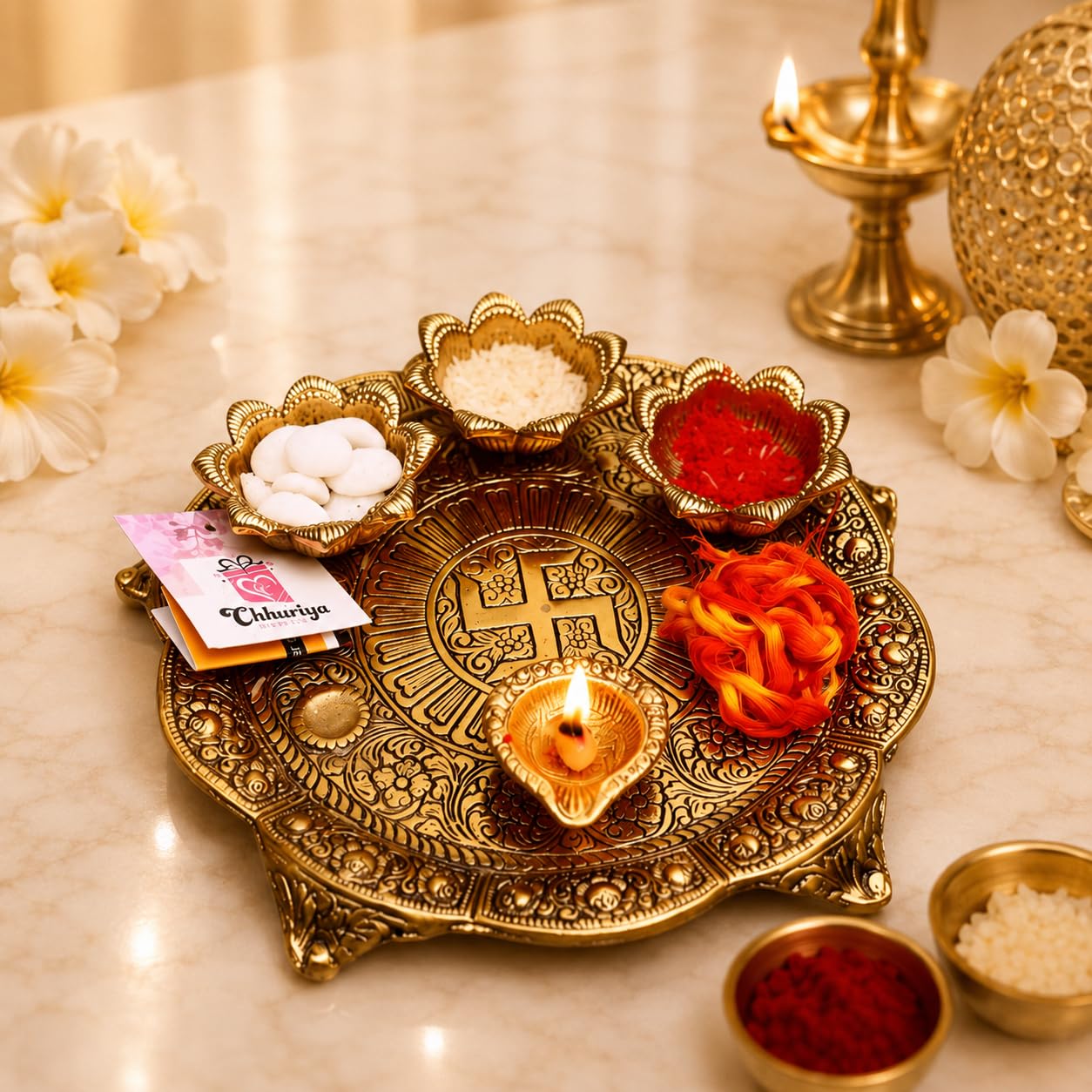
Chhariya Crafts Metal Pooja Thali With Diya for Home and Office Temple Puja Item (1 Pieces, Gold)
A compact metal thali for arranging the essentials used during everyday home Aarti.
Who it may suit: Daily home Aarti, Home mandir, Festival gifting
Key facts: Metal construction, Approximately 22 cm wide, Diya included

Akhand Jyot Diya with Adjustable Bati Knob, Wick Lifting Screw Lever, Traditional Oil Lamp for Puja, Mandir & Home Decor 75 ml Stay Lit for 18 Hours (Small)
A diya or aarti lamp listed in a small size and with a listed capacity of 75 ml.
Who it may suit: Daily aarti, Festive lighting, Home mandir
Key facts: Size: Small, Capacity: 75 ml, Includes: Adjustable bati knob, Wick lifting lever, and Wick
These product guides contain Amazon affiliate links. Valkala may earn a commission at no extra cost to you. Read the full affiliate disclosure.
Why it is called Dev Uthani
Drik Panchang explains that Lord Vishnu goes to sleep on Devshayani Ekadashi in Ashadha and wakes four months later on Prabodhini Ekadashi in Kartika. That four-month holy period is Chaturmas. Dev Uthani means the waking of the Lord, and the day marks the end of Chaturmas. Prabodhini and Devutthana are other names for the same Ekadashi.
Smarta and Vaishnava dates
In 2026 the Ekadashi tithi spans two sunrises. Drik Panchang gives Friday, 20 November for Smarta householders and Saturday, 21 November as the second-day (Gauna) Ekadashi, which Vaishnava communities keep. Both dates are shown above. Follow the calendar of your family, temple or sampradaya, and take the parana time from a panchang set to your city.
Tulsi Vivah
Tulsi Vivah is the ceremonial marriage of the tulsi plant, revered as Goddess Tulsi or Vrinda, with Lord Vishnu, usually represented by a Shaligram, or with Krishna. Drik Panchang notes that the Padma Purana places it on Kartika Shukla Navami, while other texts treat the five days from Prabodhini Ekadashi to Kartik Purnima as suitable. For New Delhi in 2026, Drik Panchang and Prokerala both give Saturday, 21 November.
How Tulsi Vivah is celebrated
Customs vary widely. Drik Panchang describes full wedding rituals in the Braj region, with an evening ceremony after a day's fast; a white cloth (antahpat) held between Tulsi and Vishnu in Maharashtra while Mangalashtaka is recited; and Tulasi Kalyanam in Andhra Pradesh and Telangana, where Vishnu is worshipped as an amla branch. A household can keep a simple puja and aarti, or join the ceremony at a temple.
How these dates were checked
The dates are for New Delhi and were checked on 29 September 2026. Dev Uthani Ekadashi 2026 and Tulsi Vivah 2026 appear on the same day in Drik Panchang and Prokerala, and Dev Uthani Ekadashi 2027 also in AstroSage. Tulsi Vivah 2027 is not listed yet, because only Drik Panchang states its date so far. No clock times are shown.
Frequently asked questions
When is Dev Uthani Ekadashi in 2026?
Friday, 20 November 2026 for New Delhi, according to Drik Panchang and Prokerala. The Vaishnava fast is on Saturday, 21 November.
When is Tulsi Vivah in 2026?
Saturday, 21 November 2026 for New Delhi, according to Drik Panchang and Prokerala. Drik Panchang notes that it can also be performed on another suitable day between Prabodhini Ekadashi and Kartik Purnima.
Why is it called Dev Uthani Ekadashi?
Because Lord Vishnu is believed to wake on this day from the four-month sleep that begins on Devshayani Ekadashi. It marks the end of Chaturmas.
When is Dev Uthani Ekadashi in 2027?
Wednesday, 10 November 2027 for New Delhi, according to Drik Panchang, Prokerala and AstroSage.
What should I read on Dev Uthani Ekadashi?
Vishnu Sahasranamam, Om Jai Jagdish Hare, Achyutashtakam and Govind Damodar Stotram are complete options on Valkala. Reading one text attentively is enough.