संकष्टी चतुर्थी (Sankashti Chaturthi)
Sankashti Chaturthi is a monthly fast for Lord Ganesha on the Krishna Chaturthi, the fourth day after the full moon. It is kept from sunrise until the moon is sighted. The list below gives every remaining Sankashti Chaturthi in 2026 and 2027 for New Delhi, each checked against two panchangs. Because the day depends on moonrise, it can differ by a day in other cities.
संकष्टी चतुर्थी भगवान गणेश का मासिक व्रत है, जो पूर्णिमा के बाद कृष्ण पक्ष की चतुर्थी को रखा जाता है। यह सूर्योदय से चंद्रदर्शन तक रखा जाता है। नीचे की सूची में 2026 और 2027 की शेष सभी संकष्टी चतुर्थी नई दिल्ली के लिए दी गई हैं, हर तिथि दो पंचांगों से मिलाई गई है। दिन चंद्रोदय पर निर्भर है, इसलिए दूसरे शहरों में यह एक दिन अलग हो सकता है।
Sankashti Chaturthi Bhagwan Ganesh ka maasik vrat hai, jo Purnima ke baad Krishna paksh ki Chaturthi ko rakha jata hai. Yeh sooryoday se chandra darshan tak rakha jata hai. Neeche ki list mein 2026 aur 2027 ki baaki sabhi Sankashti Chaturthi New Delhi ke liye di gayi hain, har tithi do panchangon se milayi gayi hai. Din chandroday par nirbhar hai, isliye doosre shehron mein yeh ek din alag ho sakta hai.
When is Sankashti Chaturthi?
The Chaturthi (fourth) tithi of every Krishna paksha, observed on the day Chaturthi prevails at moonrise, so it sometimes falls on Tritiya.
हर कृष्ण पक्ष की चतुर्थी तिथि, जो उस दिन मनाई जाती है जब चंद्रोदय के समय चतुर्थी हो, इसलिए यह कभी-कभी तृतीया को पड़ती है।
- Vakratunda Sankashti / Karwa Chauth: Thursday, 29 October 2026 (New Delhi reference · North Indian (purnimanta) tradition)
Checked 2026-09-29 against: Drik Panchang — 2026 Sankashti Chaturthi dates, New Delhi · AstroSage Panchang — 2026 Sankashti Chaturthi dates, New Delhi - Ganadhipa Sankashti: Friday, 27 November 2026 (New Delhi reference · North Indian (purnimanta) tradition)
Checked 2026-09-29 against: Drik Panchang — 2026 Sankashti Chaturthi dates, New Delhi · AstroSage Panchang — 2026 Sankashti Chaturthi dates, New Delhi - Akhuratha Sankashti: Saturday, 26 December 2026 (New Delhi reference · North Indian (purnimanta) tradition)
Checked 2026-09-29 against: Drik Panchang — 2026 Sankashti Chaturthi dates, New Delhi · AstroSage Panchang — 2026 Sankashti Chaturthi dates, New Delhi - Sakat Chauth: Monday, 25 January 2027 (New Delhi reference · North Indian (purnimanta) tradition)
Checked 2026-09-29 against: Drik Panchang — 2027 Sankashti Chaturthi dates, New Delhi · AstroSage Panchang — 2027 Sankashti Chaturthi dates, New Delhi - Dwijapriya Sankashti: Wednesday, 24 February 2027 (New Delhi reference · North Indian (purnimanta) tradition)
Checked 2026-09-29 against: Drik Panchang — 2027 Sankashti Chaturthi dates, New Delhi · AstroSage Panchang — 2027 Sankashti Chaturthi dates, New Delhi - Bhalachandra Sankashti: Thursday, 25 March 2027 (New Delhi reference · North Indian (purnimanta) tradition)
Checked 2026-09-29 against: Drik Panchang — 2027 Sankashti Chaturthi dates, New Delhi · AstroSage Panchang — 2027 Sankashti Chaturthi dates, New Delhi - Vikata Sankashti: Saturday, 24 April 2027 (New Delhi reference · North Indian (purnimanta) tradition)
Checked 2026-09-29 against: Drik Panchang — 2027 Sankashti Chaturthi dates, New Delhi · AstroSage Panchang — 2027 Sankashti Chaturthi dates, New Delhi - Ekadanta Sankashti: Sunday, 23 May 2027 (New Delhi reference · North Indian (purnimanta) tradition)
Checked 2026-09-29 against: Drik Panchang — 2027 Sankashti Chaturthi dates, New Delhi · AstroSage Panchang — 2027 Sankashti Chaturthi dates, New Delhi - Krishnapingala Sankashti (Angarki Chaturthi): Tuesday, 22 June 2027 (New Delhi reference · North Indian (purnimanta) tradition)
Checked 2026-09-29 against: Drik Panchang — 2027 Sankashti Chaturthi dates, New Delhi · AstroSage Panchang — 2027 Sankashti Chaturthi dates, New Delhi - Gajanana Sankashti: Thursday, 22 July 2027 (New Delhi reference · North Indian (purnimanta) tradition)
Checked 2026-09-29 against: Drik Panchang — 2027 Sankashti Chaturthi dates, New Delhi · AstroSage Panchang — 2027 Sankashti Chaturthi dates, New Delhi - Bahula Chaturthi: Friday, 20 August 2027 (New Delhi reference · North Indian (purnimanta) tradition)
Checked 2026-09-29 against: Drik Panchang — 2027 Sankashti Chaturthi dates, New Delhi · AstroSage Panchang — 2027 Sankashti Chaturthi dates, New Delhi - Vighnaraja Sankashti: Sunday, 19 September 2027 (New Delhi reference · North Indian (purnimanta) tradition)
Checked 2026-09-29 against: Drik Panchang — 2027 Sankashti Chaturthi dates, New Delhi · AstroSage Panchang — 2027 Sankashti Chaturthi dates, New Delhi - Karwa Chauth: Monday, 18 October 2027 (New Delhi reference · North Indian (purnimanta) tradition)
Checked 2026-09-29 against: Drik Panchang — 2027 Sankashti Chaturthi dates, New Delhi · AstroSage Panchang — 2027 Sankashti Chaturthi dates, New Delhi - Ganadhipa Sankashti: Wednesday, 17 November 2027 (New Delhi reference · North Indian (purnimanta) tradition)
Checked 2026-09-29 against: Drik Panchang — 2027 Sankashti Chaturthi dates, New Delhi · AstroSage Panchang — 2027 Sankashti Chaturthi dates, New Delhi - Akhuratha Sankashti: Thursday, 16 December 2027 (New Delhi reference · North Indian (purnimanta) tradition)
Checked 2026-09-29 against: Drik Panchang — 2027 Sankashti Chaturthi dates, New Delhi · AstroSage Panchang — 2027 Sankashti Chaturthi dates, New Delhi
Dates can differ by a day in other places and traditions. For your city, check a local panchang or your temple calendar.
What to read
Puja outline
- Decide before the day how you will keep the fast, and make it suit your health. Many devotees take only fruit, roots and simple fasting food.
व्रत किस प्रकार रखेंगे, यह पहले से तय करें और अपने स्वास्थ्य के अनुसार रखें। कई भक्त केवल फल, कंद और सादा व्रत का भोजन लेते हैं। - Begin the fast at sunrise and keep a picture or idol of Ganesha ready for the evening puja.
सूर्योदय से व्रत शुरू करें और संध्या पूजा के लिए गणेश जी का चित्र या मूर्ति तैयार रखें। - In the evening, offer durva grass, flowers and a sweet such as modak or laddoo, and light a diya.
संध्या में दूर्वा, फूल और मोदक या लड्डू जैसा मीठा अर्पित करें, और दीपक जलाएँ। - Read the Sankashti vrat katha if your family does, and one complete Ganesha text, such as Sankat Nashan Ganesh Stotra.
आपके परिवार में परंपरा हो तो संकष्टी व्रत कथा पढ़ें, और संकटनाशन गणेश स्तोत्र जैसा कोई एक पूर्ण पाठ करें। - After moonrise, offer water (arghya) to the moon.
चंद्रोदय के बाद चंद्रमा को जल (अर्घ्य) अर्पित करें। - Sing Jai Ganesh Deva and break the fast after sighting the moon.
जय गणेश देवा आरती गाएँ और चंद्रदर्शन के बाद व्रत खोलें।
A simple household outline. Customs differ by family, region and tradition; follow your own tradition or priest where it differs.
Samagri for this puja
Practical items for the puja, linked to Valkala product guides.

100% Pure Brass Spoon Aarti Diya with Wooden Handle | Medium Size Pooja Diya | Traditional Oil Lamp for Temple, Prayer & Festivals | Housewarming & Indian Ceremonial Gifting
A diya or aarti lamp made with brass and wood and listed in a medium size.
Who it may suit: Daily aarti, Festive lighting, Home mandir
Key facts: Material: Brass, Material: Wood, Medium Size
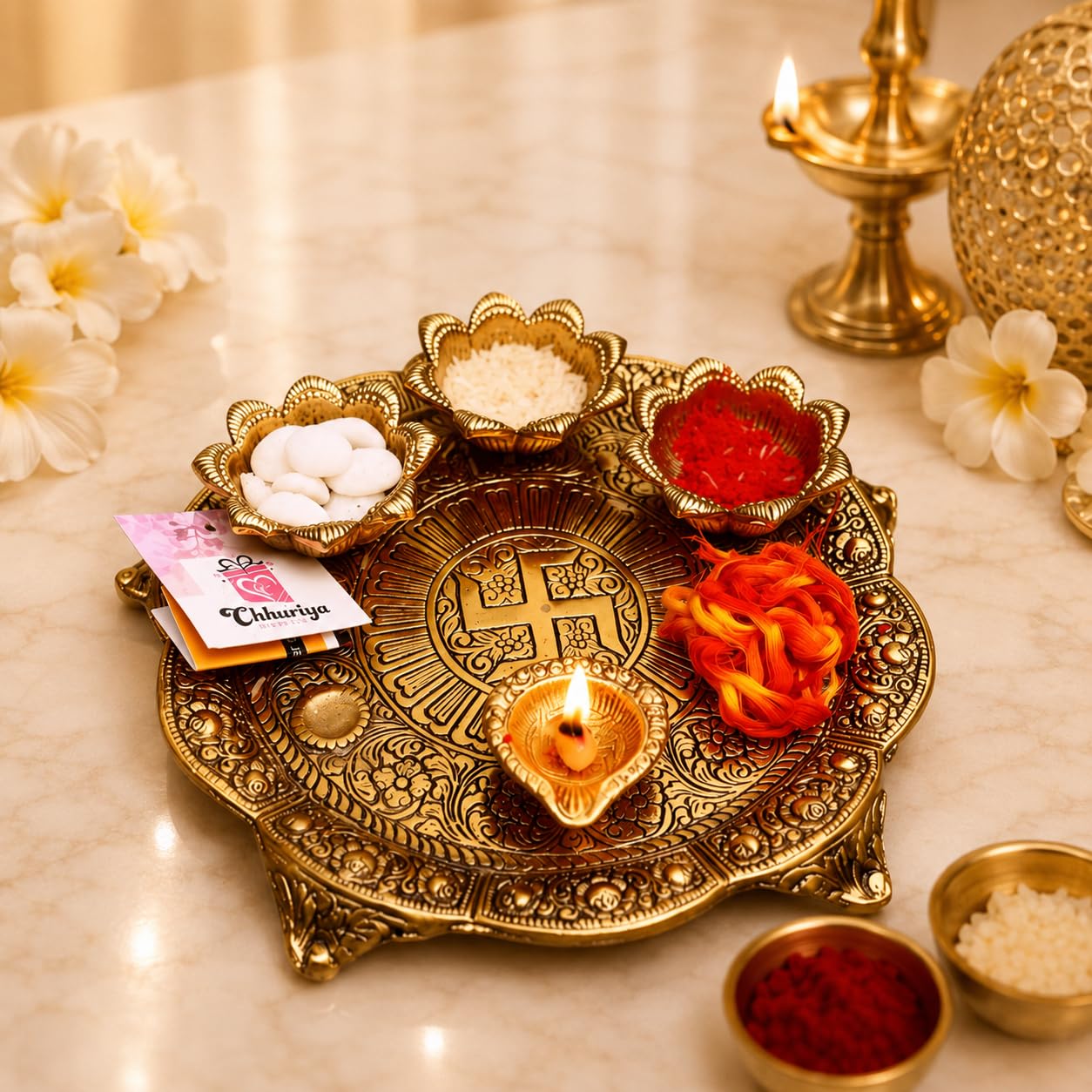
Chhariya Crafts Metal Pooja Thali With Diya for Home and Office Temple Puja Item (1 Pieces, Gold)
A compact metal thali for arranging the essentials used during everyday home Aarti.
Who it may suit: Daily home Aarti, Home mandir, Festival gifting
Key facts: Metal construction, Approximately 22 cm wide, Diya included

Akhand Jyot Diya with Adjustable Bati Knob, Wick Lifting Screw Lever, Traditional Oil Lamp for Puja, Mandir & Home Decor 75 ml Stay Lit for 18 Hours (Small)
A diya or aarti lamp listed in a small size and with a listed capacity of 75 ml.
Who it may suit: Daily aarti, Festive lighting, Home mandir
Key facts: Size: Small, Capacity: 75 ml, Includes: Adjustable bati knob, Wick lifting lever, and Wick
These product guides contain Amazon affiliate links. Valkala may earn a commission at no extra cost to you. Read the full affiliate disclosure.
Detailed guides
What is Sankashti Chaturthi?
Each lunar month has two Chaturthis. The one after Amavasya, in the Shukla paksha, is Vinayaka Chaturthi; the one after Purnima, in the Krishna paksha, is Sankashti Chaturthi. Drik Panchang explains that Sankashti means deliverance in troubled times, and that devotees keep this fast to Lord Ganesha, the remover of obstacles. It is most widely kept in Maharashtra and Tamil Nadu, and is observed across India.
How the fast is traditionally kept
Drik Panchang describes the fast as running from sunrise to moonrise. It is traditionally strict, with only fruit, roots and vegetable foods such as sabudana khichdi, potato and peanuts, and it is broken at night after the moon is sighted. None of this is compulsory. Anyone who is unwell, pregnant, elderly or on medication should take appropriate advice before fasting.
Angarki, Sakat Chauth and Karwa Chauth
A Sankashti Chaturthi that falls on a Tuesday is called Angarki Chaturthi and is considered highly auspicious; the next one is on 22 June 2027. In North India the Sankashti of Magha is Sakat Chauth, on 25 January 2027, and Drik Panchang treats it as the most important Sankashti of the year. The Sankashti of Kartika is the day of Karwa Chauth, which Drik Panchang gives as 29 October 2026 and 18 October 2027.
Why the date depends on your city
The fast is kept on the day Chaturthi prevails at moonrise, and moonrise differs from city to city. Drik Panchang notes that the fasting day can therefore differ between two cities, even in the same state, and can fall on Tritiya, the day before Chaturthi. The dates on this page are for New Delhi. Take your moonrise time from a panchang set to your city.
How these dates were checked
Every date on this page is for New Delhi and was checked on 29 September 2026 against the Drik Panchang and AstroSage Sankashti lists; each listed date appears on the same day in both. The monthly names, such as Ganadhipa or Akhuratha, are Drik Panchang's. No clock times are shown.
Frequently asked questions
When is the next Angarki Chaturthi?
The next Sankashti Chaturthi on a Tuesday, called Angarki Chaturthi, is on 22 June 2027 for New Delhi, according to Drik Panchang and AstroSage.
When is Sakat Chauth in 2027?
Sakat Chauth, the Sankashti Chaturthi of Magha, is on Monday, 25 January 2027 for New Delhi.
When is the Sankashti fast broken?
After the moon is sighted at night. Moonrise differs by city, so take the time from a panchang set to your location.
What is the difference between Sankashti and Vinayaka Chaturthi?
Sankashti Chaturthi is the Krishna paksha Chaturthi, after the full moon. Vinayaka Chaturthi is the Shukla paksha Chaturthi, after the new moon; the Vinayaka Chaturthi of Bhadrapada is Ganesh Chaturthi.
What should I read on Sankashti Chaturthi?
Jai Ganesh Deva, Sankat Nashan Ganesh Stotra, the Vakratunda Mahakaya mantra and Gaiye Ganpati Jagvandan are complete options on Valkala, along with the Sankashti vrat katha if your family reads it. Reading one text attentively is enough.