जय गणेश जय गणेश जय गणेश देवा। माता जाकी पार्वती पिता महादेवा॥
Jai Ganesh Jai Ganesh Jai Ganesh Deva | Mata Jaki Parvati Pita Mahadeva ||
English meaning: Glory, glory, glory to Lord Ganesha! Mother is Goddess Parvati and father is Lord Shiva (Mahadeva).
2
एक दन्त दयावन्त चार भुजाधारी। माथे सिन्दूर सोहे मूसे की सवारी॥
Ek Dant Dayavant Char Bhujadhari | Mathe Sindoor Sohe Moose Ki Sawari ||
English meaning: Single-tusked, merciful, holder of four arms, with vermilion gracing his forehead, riding upon his mouse.
3
अंधन को आंख देत कोढिन को काया। बांझन को पुत्र देत निर्धन को माया॥
Andhan Ko Aankh Det Kodhin Ko Kaya | Banjhan Ko Putra Det Nirdhan Ko Maya ||
English meaning: The verse traditionally praises Lord Ganesha as a compassionate giver of relief, family blessings, and prosperity; these are devotional claims rather than medical guidance.
4
पान चढ़े फूल चढ़े और चढ़े मेवा। लड्डुअन का भोग लगे संत करें सेवा॥
Pan Chadhe Phool Chadhe Aur Chadhe Mewa | Ladduan Ka Bhog Lage Sant Karen Sewa ||
English meaning: Offerings of betel leaves, flowers, dry fruits, and sweet Laddus are presented while saints render loving service.
5
दीनन की लाज रखो शम्भु सुत काज कीजै। कामना को पूरा करो जग बलिहारी जै॥
Deenan Ki Laj Rakho Shambhu Sut Kaj Keejai | Kamna Ko Poora Karo Jag Balihari Jai ||
English meaning: Protect the dignity of the humble, Son of Shambhu! Fulfill all righteous wishes; the entire universe sings your praise!
What is Shri Ganesh Ji Ki Aarti?
Jai Ganesh Jai Ganesh Deva is a traditional Hindi Aarti to Ganesha. It praises him as the son of Parvati and Shiva, describes his one tusk, four arms, vermilion mark, and mouse vehicle, and asks for compassionate help and the acceptance of offerings.
Which Ganesh Aarti is this?
This is the North Indian Hindi Aarti beginning Jai Ganesh Jai Ganesh Deva. It is distinct from the Marathi Aarti Sukhkarta Dukhharta. The authorship of Jai Ganesh Deva is not established consistently in reliable sources, so Valkala labels it Traditional rather than assigning a named poet.
Text and variant note
Printed and sung versions vary. Some include a refrain after every stanza, use tilak instead of sindoor, or add a final stanza beginning Sur Shyam sharan aaye. This page currently preserves a common five-verse version. It does not claim to represent every regional performance tradition.
Understanding devotional claims
One verse uses traditional language about relief from blindness, disease, childlessness, and poverty. The meaning below identifies this as devotional praise, not a factual promise or health claim. Prayer may offer spiritual support but must not replace appropriate medical or professional care.
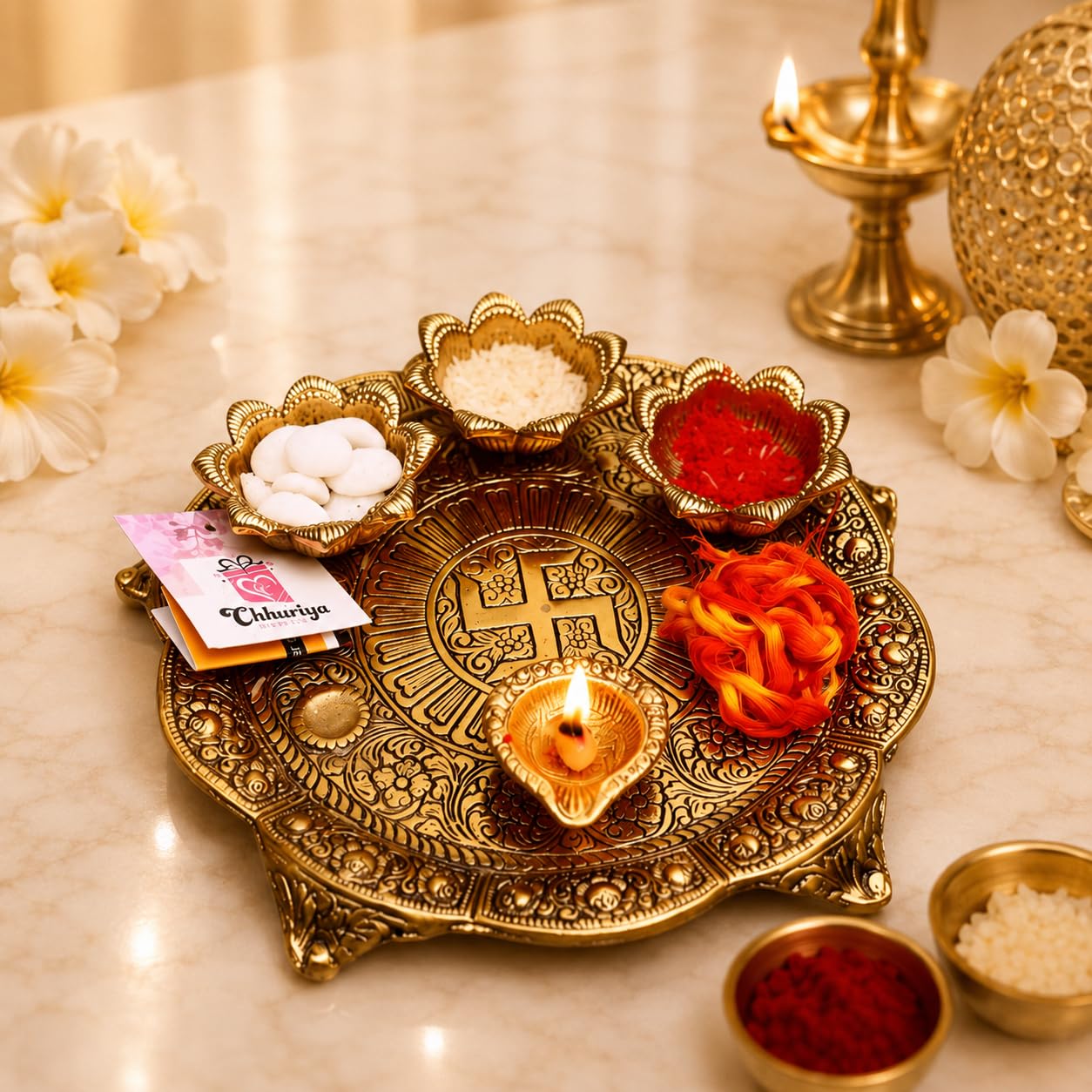
Set up your Aarti thali
A thali, diya and bell are the essentials for performing Aarti. Here are a few reviewed options.